Sunday, September 22, 2013

IB Verification Visit

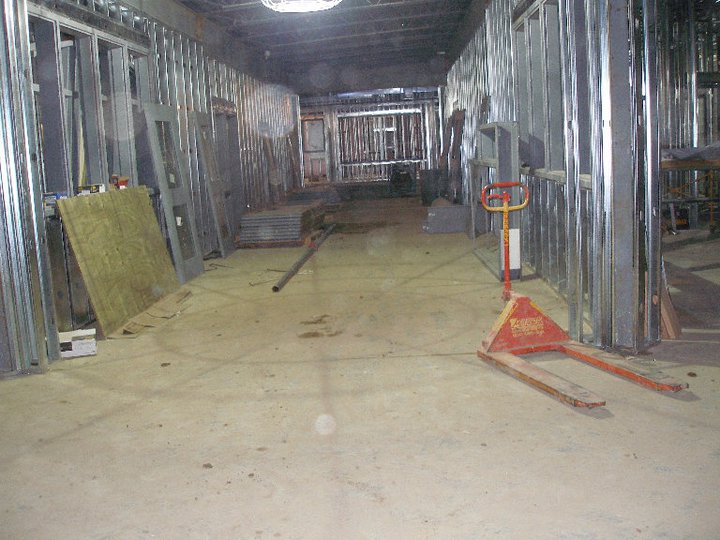
Monday, Sept. 23 marks a big day for College View teachers, students and families. It marks the beginning of our final phase as an International Baccalaureate candidate school. We began our journey with IB in January of 2011 when College View looked like this:
We started by gathering a group of soon-to-be College View parents to form an IB Parent Board. This group of parents, along with College View Principal, Sue Rice, and myself (the newly hired IB coordinator), began studying the elements of the IB Program.

Shortly after the formation of the parent board, Sue and I attended an IB workshop to learn more about the program and how it might fit with the initiatives that were currently in place in Council Bluffs.  

After the workshop, we immediately began writing the official Application for Candidacy, requesting that College View be granted candidate status from the International Baccalaureate Organization.  The application was accepted a few months later and that’s when the real work began.

College View teachers began learning about the program - both through official IB workshops and building-based professional development. Many teachers had the opportunity to see IB Programs in action by visiting authorized IB World Schools.  

They learned about the Learner Profile, a set of 10 attributes that all members of the school community strive to demonstrate. Teachers worked collaboratively to develop in-depth units of inquiry. They reflected on their planning, teaching and student learning, and revised and refined those units.

Special area teachers worked to incorporate the elements of the IB Program into  areas like Spanish, PE, music, special education and art. After all of this hard work, we felt that we were ready to become an authorized IB World School. We submitted our Application for Authorization last spring. It was accepted and a verification visit was scheduled.

That brings us to today. IB has sent a team of two educators to College View to verify that we are ready to become an IB world school. Over the next two days, they will meet with teachers, parents and administrators to discuss how the program has been developed and will continue to grow in our school.

They will visit classrooms, speak to students and view student work looking for evidence of teaching and learning that engages students as thinkers and inquirers. They will review units of inquiry and our Program of Inquiry looking for a written curriculum that builds upon students’ previous learning experiences and that allows for meaningful student action to take place.
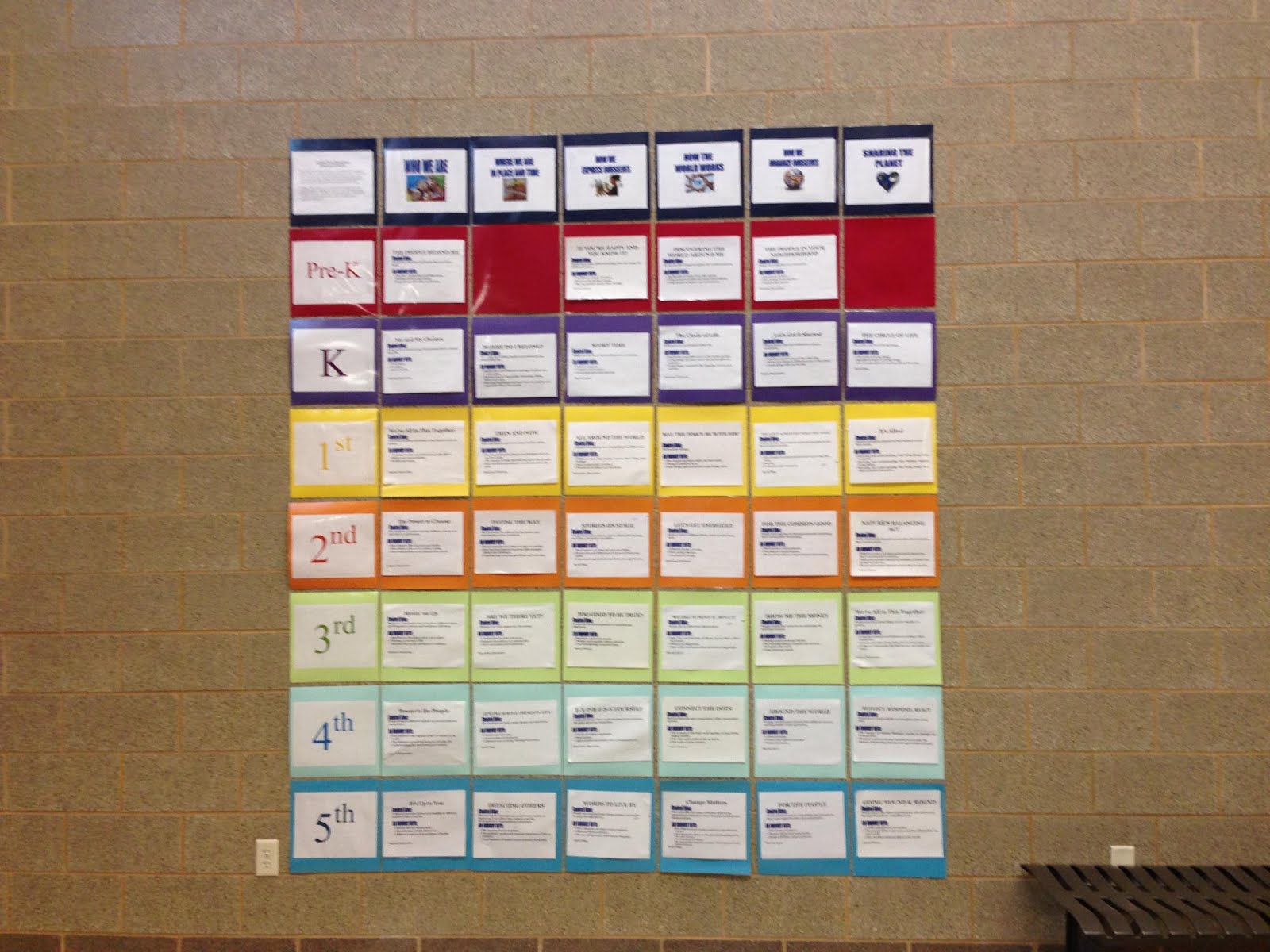

The College View Program of Inquiry

After the visit, the verification team will write a report summarizing the findings of the visit. It is our hope that the report will result in a recommendation that College View Elementary become Southwest Iowa’s first authorized IB World School.

Am I nervous? You bet.

But I also know that the teachers at College View have worked tirelessly to incorporate the elements of the IB program into their teaching. I know that the administrators involved believe in the program and have helped us to align the philosophies of the IB Program and of CBCSD. I know that the parents at College View are excited about having the IB program at our school and want to see it grow in our district.

And the students? Wow. As a College View parent, I’ve seen first hand that the students are inquirers within the classroom and beyond. They understand the language of the Learner Profile and strive to live by those attributes.

Reflecting upon all of these things calms my nerves. We’ve worked long and hard to implement the IB Program at College View.

We’ve got this.

Thursday, February 21, 2013

Program of Inquiry


The teachers at College View have been working hard to develop the school's Program of Inquiry (POI). The POI is a snapshot of the units of inquiry that are being taught at College View. In grades K-5, each grade level develops a unit of inquiry to be taught for each of the 6 transdisciplinary themes.  Preschool uses the transdisciplinary themes to develop 4 units that are taught throughout the year.

The POI is an ever-changing public document that gives stakeholders an idea of the concept-driven units being taught at College View. It is displayed in the hallway at school and can be viewed on our website.
POI display at College View
Teachers study the POI as they plan and refine units of inquiry. We are striving to develop a POI that is aligned both vertically and horizontally. Teachers in each grade level study the horizontal alignment of the units they develop. When looking at the POI horizontally, the aim is to make sure there is a balance of the essential elements (knowledge, skills, attitudes, concepts and action) throughout the 6 units that are taught and to assure that the units are appropriately placed under each transdisciplinary theme. The entire staff studies the vertical alignment of the POI. The aim is not only to have a balance of the essential elements under each transdisciplinary theme, but also to ensure that there is a clear, developmental progression under each theme.

This is the "working" version of the POI found in the PYP Coordinator's office. Teachers reference this as they plan and refine units of inquiry.
Be sure to visit our school and our website often to view the most current version of our POI!

Sunday, October 21, 2012

Knowledge


The International Baccalaureate Primary Years Program is a framework for international education. There are five essential elements at the heart of the  PYP. They are:
  • Knowledge
  • Skills
  • Concepts
  • Attitudes 
  • Action
    Source    
My last post focused on the action cycle. Action is one of the essential elements of the program. I wrote about it first because, at the time of my posting, teachers were just wrapping up their first units of inquiry and I wanted parents to be on the lookout for student initiated action. It is the student experiences that take place during a unit of inquiry that often lead to student initiated action, so I'd like to backtrack with this post and write a little about how we get students to that point.

Knowledge is an essential element that addresses the question What do we want students to know about? The IB Organization believes that educating students in a set of isolated subject areas, while necessary, is not sufficient. Of equal importance is the need to acquire skills in context, and to explore content that is relevant to students, and transcends the boundaries of the traditional subjects (Making the PYP Happen, 2009).

Like all schools in Council Bluffs, we teach the district adopted curriculum which aligns with the Iowa Common Core Curriculum. Like all IB world schools, we help students make connections within and across disciplines in order to help them develop a deep understanding of important concepts.

IB provides a six transdisciplinary themes that are considered essential in a program of international education. According to the IB organization, these themes:
  • Have global significance- for all students in all cultures
  • Offer students the opportunity to explore the commonalities of human experience
  • Are supported by knowledge, concepts and skills from the traditional subject areas but utilize them in ways that transcend the confines of these subjects, thereby contributing to a transdisciplinary model of teaching and learning
  • Will be revisited throughout the students’ years of schooling, so that the end result is immersion in broad-ranging, in-depth, articulated curriculum content
  • Contribute to the common ground that unifies the curriculums in all PYP schools
Each grade level engages in a unit of inquiry in one of each of the following transdisciplinary themes:
  1. Who we are- An inquiry into the nature of the self; beliefs and values; personal, physical, mental, social and spiritual health; human relationships including families, friends, communities, and cultures; rights and responsibilities; what it means to be human.
  2. Where we are in place and time- An inquiry into orientation in place and time; personal histories; homes and journeys; the discoveries, explorations and migrations of humankind; the relationships between and the interconnectedness of individuals and civilizations, from local and global perspectives.
  3. How we express ourselves- An inquiry into the ways in which we discover and express ideas, feelings, nature, culture, beliefs and values; the ways in which we reflect on, extend and enjoy our creativity; our appreciation of the aesthetic.
  4. How the world works- An inquiry into the natural world and its laws; the interaction between the natural world (physical and biological) and human societies; how humans use their understanding of scientific principles; the impact of scientific and technological advances on society and on the environment.
  5. How we organize ourselves- An inquiry into the interconnectedness of human-made systems and communities; the structure and function of organizations; societal decision-making; economic activities and their impact on humankind and the environment.
  6. Sharing the planet- An inquiry into rights and responsibilities in the struggle to share finite resources with other people and with other living things; communities and the relationships within and between them; access to equal opportunities; peace and conflict resolution.
Transdiciplinary theme descriptions taken from Making the PYP Happen, 2009

This framework allows College View teachers to provide students with the knowledge they need to be educated as citizens of a global community.

Thursday, September 27, 2012

Action Cycle


As many of you know, College View is a candidate school for the International Baccalaureate Primary Years Program. One of the essential elements of this program is for students to take action as a result of their learning. We believe that successful inquiry will lead to responsible action, initiated by the student as a result of the learning process.

Our hope is that students will move through the action cycle as a result of their learning. After each unit of inquiry, we hope to give students the opportunity and power to choose to act, to decide on their actions, and to reflect on their actions in order to make a difference in the world. 

IB PYP Action Cycle
Student initiated action can take many different forms. Action can be taken by an individual student, groups of students or as a school community. Action may take place at home, at school or in the community.

Action can be big or small. Last year, at College View, we had quite the range of student initiated action. After learning about how people rely on one another, a group of 4th grade students raised money for the Red Cross. This was a rather large project that included many students and impacted the community. On a smaller scale, we had a kindergarten student who had learned about life cycles, choose not to pick dandelions on the playground because she knew it would stop the life cycle. Both examples demonstrate how students took action as a result of their learning.

As parents, you can help your child's teacher by letting her know if you see your child taking action as a result of his/her learning. Our hope is that the units of inquiry are not just something they are learning, but that they are something that changes the way they think about our world. 

Teachers are just wrapping up their first units on the following concepts. Please let your child's teacher know if you see your child taking action as a result of his/her learning.
  • Preschool:  Making and keeping friends
  • Kindergarten:  Rules and routines in the school community
  • 1st Grade:  Individual rights and responsibilities
  • 2nd Grade: Personal Coices
  • 3rd Grade: Survival in inter-related systems
  • 4th Grade: Interdependence among groups of people
  • 5th Grade: Personal, physical, social, spiritual and mental health